Home › Services › Gutters and Downspouts
A standard five-inch gutter handles ordinary rain. Gulf Coast downpours are not ordinary, and a two-story roof dumping into a single run over the front door shows it. Six-inch gutters with larger downspouts carry more, clog less, and cost a little more. On a large, steep roof they are usually worth it.
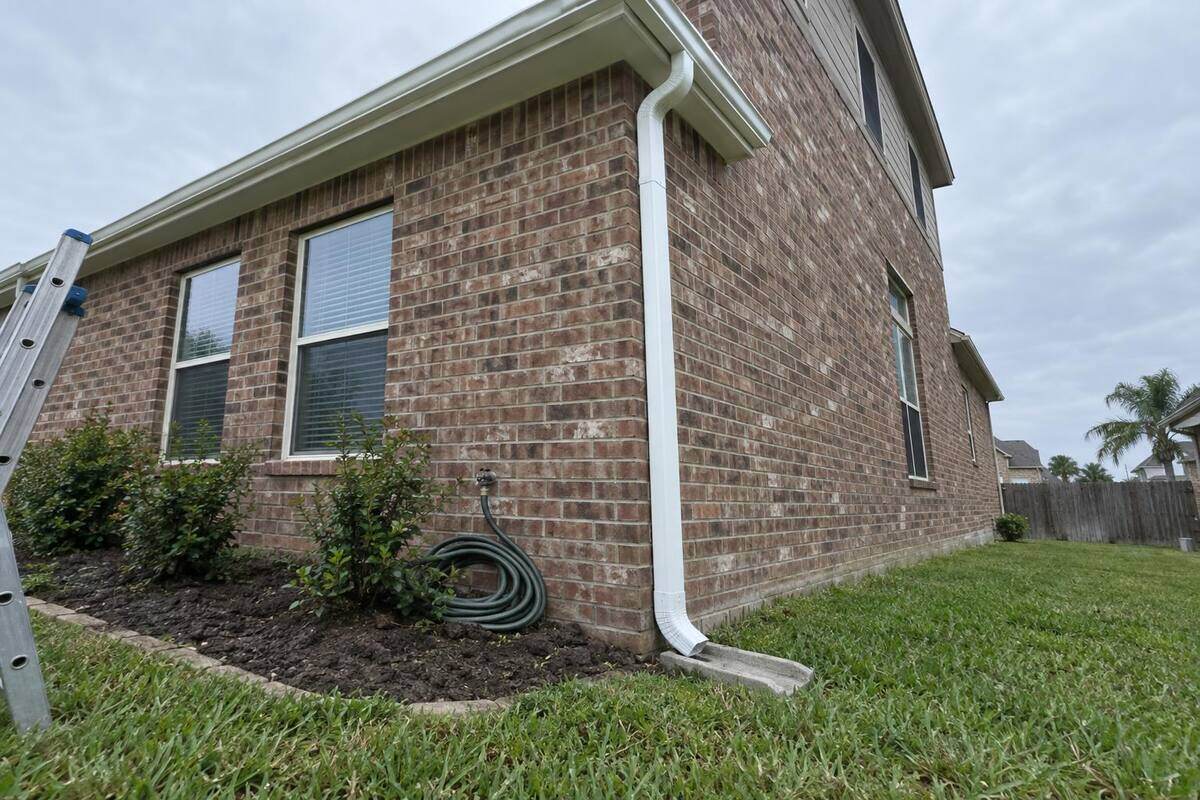
The downspout is half the job. Water should land on a splash block or an extension that carries it several feet from the foundation, onto soil graded away from the house. A downspout emptying against the slab, into a flower bed that holds water, keeps one corner of the clay wetter than the rest.
Underground drain lines work when they are sloped and kept clear; when they are not, they back up quietly. A contractor should check where existing lines come out before tying new downspouts into them.
Seamless aluminum is formed on site to the length of each run, so there are joints only at the corners. Guards help under live oaks and pines, not at all under open sky. The gutter hangs behind the drip edge; if the fascia behind it is soft, that repair comes first, and it is covered on the siding and fascia page.
No. TDI and TWIA both list gutter repair and replacement as exempt.
Several feet, onto ground that slopes away from the house. Farther is better on clay.
Under trees, often. Without trees overhead, rarely.
Say how many stories and where water pools. A local contractor calls back.
Call (832) 905-8893 Book a Wind Inspection League City Roofing