Home › Services › Siding, Trim and Fascia After Wind
The tallest flat wall, catching wind broadside. Siding and trim there fail first.
Wind accelerates around a corner and pulls at the edge of the siding.
A vented soffit panel that blows out opens the attic to rain.
The board behind the gutter. Once it is soft, the gutter goes with it.
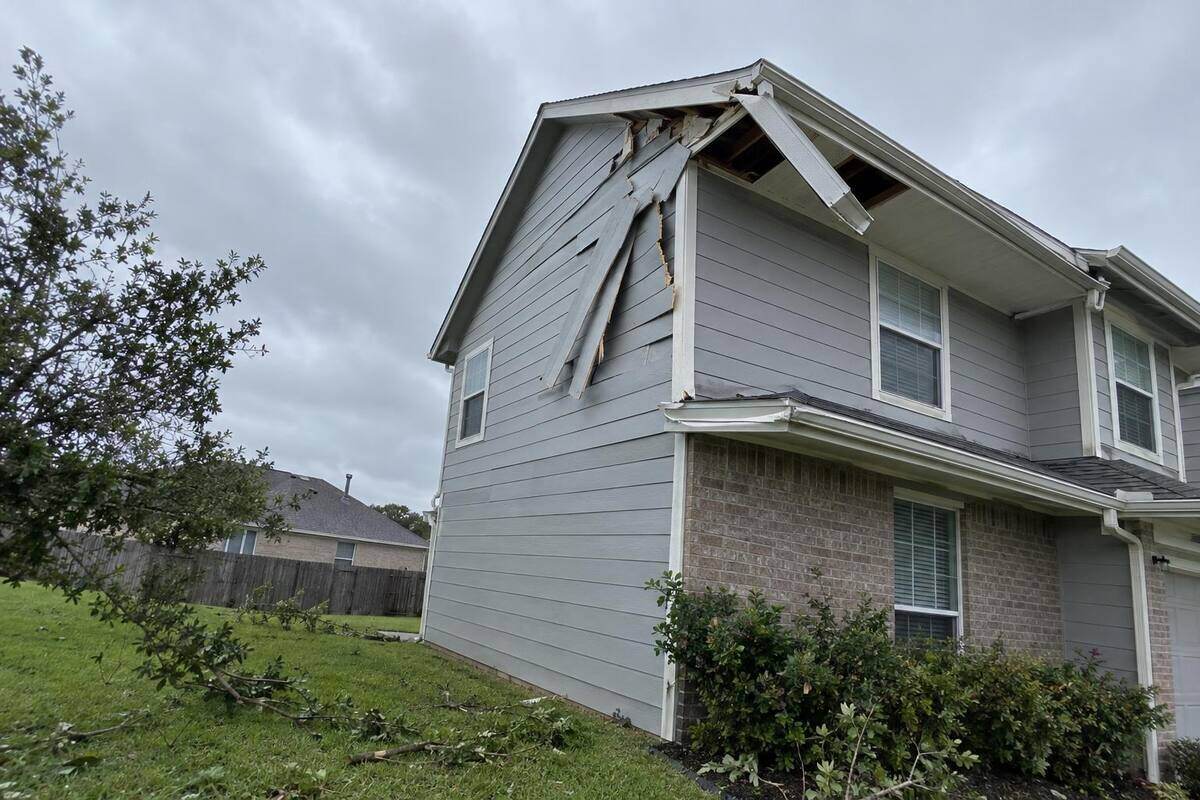
A torn section of fiber-cement or hardboard can be patched with matching material, trim replaced board by board, and soffit panels reset. The line comes where TWIA puts it on the Galveston County side: “re-siding a significant portion of an exterior wall” needs a certificate of compliance. Replacing the gable end of a two-story is likely there; re-nailing a corner is not.
Ask the contractor, before work starts, which side of that line the repair is on. If it is on the certificate side, the weather barrier and fastening get inspected before the siding covers them.
The windstorm inspection applies in League City, Friendswood south of Clear Creek, Dickinson, Kemah, Clear Lake Shores, Bacliff, San Leon, Santa Fe and Seabrook. It does not apply in Clear Lake City, Nassau Bay, Webster, El Lago or Taylor Lake Village. The county line page has the table.
Plastic and tape over an open soffit or a torn wall the day of the storm is sensible, and TWIA lists temporary repairs after a storm as work that does not need a certificate. The permanent repair follows once materials can be matched and the wall is dry.
Usually. Fiber-cement profiles are widely available; older hardboard can be harder, and sometimes one wall gets re-sided so the whole face matches.
Small soffit repairs are generally minor work; a contractor should confirm whether any part of the job falls under TWIA’s certificate list.
It often simplifies the schedule. Many roofing contractors here also do siding and trim.
Say what came loose and where. A local contractor calls back.
Call (832) 905-8893 Book a Wind Inspection League City Roofing